Concept designer
You need several rough 3D directions from sketches or reference images before choosing one to develop.
Prioritize quick comparison and easy regeneration over perfect topology on the first pass.
hitem3d examples freeWorkflow comparison
A hitem3d alternative should be judged by the work it helps you finish, not by a feature list alone. Compare the total effort behind a usable model, including cleanup, revisions, export checks, and handoff.
You need several rough 3D directions from sketches or reference images before choosing one to develop.
Prioritize quick comparison and easy regeneration over perfect topology on the first pass.
hitem3d examples freeYou are building a small asset set and need models that can move from ideation into an engine with predictable cleanup.
Compare export behavior, texture needs, and the amount of retopology your chosen route requires.
hitem3d AI-powered 3D model generatorYou want a printable object from a visual reference, but the generated surface may need support and manifold checks.
Choose the route that makes inspection and repair less frustrating than starting from a blank scene.
split for 3D printingSeveral people need to review generated assets, repeat a process, and keep source inputs understandable months later.
Value consistency, documentation, and handoff controls alongside the visual result.
hitem3d for softwareWrite down the intended use before comparing tools: a concept render, an editable asset, a game-ready object, or a physical print. The acceptable amount of cleanup changes with the destination.
Use one representative image or prompt in hitem3d and the alternative. Record the number of useful outputs, the revisions needed, and any missing parts rather than judging only the best screenshot.
Open the chosen model in the software that follows generation. Inspect scale, orientation, topology, textures, naming, and export behavior before treating visual similarity as a production win.
The cheapest route is not always the one with the lowest access cost. Count the human minutes spent correcting, explaining, exporting, and regenerating the model.
Access cost
hitem3d
Review the current access terms and any limits that apply to the workflow you need.
A typical alternative
Compare its access terms against your expected number of generations and revisions.
Input preparation
hitem3d
Useful when your reference image or description can be made specific enough to guide a 3D result.
A typical alternative
May reward cleaner source images, multiple angles, or more detailed preparation before generation.
Output cleanup
hitem3d
Budget time for checking geometry, hidden surfaces, proportions, and textures before delivery.
A typical alternative
The cleanup burden varies widely; a visually strong first pass can still need substantial repair.
Revision cost
hitem3d
Regeneration can be efficient for exploring directions, but repeated changes may require careful prompt or reference control.
A typical alternative
Some alternatives offer stronger editing or scene controls, which can reduce full regeneration when a small detail changes.
Export and handoff
hitem3d
Confirm that the resulting files and materials suit the next application instead of assuming a preview is production-ready.
A typical alternative
Compare supported export behavior, naming, scale, and material handling in the actual software you use.
Learning curve
hitem3d
A familiar interface can make early experiments feel inexpensive even when later cleanup remains manual.
A typical alternative
A more advanced alternative may take longer to learn but repay that time through repeatable controls or better integration.
Total human effort
hitem3d
Best measured by the time from reference to an approved, usable asset, not by generation time alone.
A typical alternative
Best measured with the same input, destination, and quality bar so the comparison does not favor a polished preview.
 Reference workflow
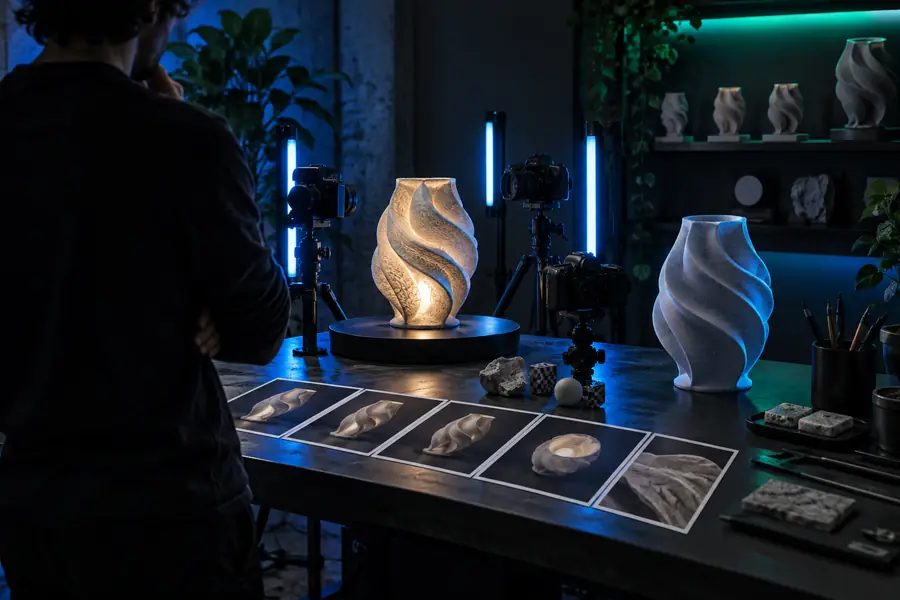 Alternative workflow
Time savings usually appear after generation, when the model must be corrected, explained, exported, or reused. Be honest about the work your route cannot remove.
A generated mesh may look convincing while still containing dense, uneven, or awkward geometry that is unsuitable for animation or editing.
Workaround
Open a representative result in your target software and include retopology or mesh repair in the trial.
A single image or short description leaves unseen sides, internal structure, and exact proportions open to interpretation.
Workaround
Supply additional views or choose a workflow that lets you edit the missing areas explicitly.
Vague inputs make it difficult to tell whether a result is wrong or simply following an underspecified request.
Workaround
State the object, camera view, materials, scale, intended use, and details that must not change.
Two tools may produce similarly attractive previews but differ sharply in file handling, repeatability, licensing terms, and downstream compatibility.
Workaround
Test the complete handoff with the same asset and document the checks that matter to your team.
Switch when the alternative removes a recurring bottleneck rather than merely producing a different-looking first result. A move can make sense if it gives you better control over revisions, a cleaner handoff to your target software, more suitable export behavior, or a quality level that reduces manual repair. Stay with hitem3d when its current workflow already meets your destination, your cleanup is predictable, and the cost of learning and migrating would exceed the benefit.
Test the alternativeStart with your destination: concept review, game asset, software pipeline, or 3D print. Compare the complete route from input to approved file, including revisions, geometry cleanup, materials, export behavior, and the time needed to fix mistakes.
No. A tool can look better in a preview while creating more work in the handoff. The better choice is the one that meets your quality bar with less total effort for the kind of assets you actually make.
Use the same reference, prompt, destination software, and acceptance criteria in both tools. Record useful outputs, failed attempts, cleanup steps, revision time, and export issues instead of comparing only the strongest image.
Switch when a repeated limitation affects delivery, such as difficult revisions, poor export handling, inconsistent outputs, or excessive mesh repair. If your current workflow is predictable and already fits the destination, migration may add more friction than value.
No. Image- and text-driven generation must interpret incomplete information, so geometry, scale, hidden surfaces, and materials still need inspection. A strong alternative can reduce cleanup or make corrections easier, but it cannot replace a final quality check.